The Expert Take: AI Smart Glasses Reshape Developer Landscape
In our experience working with hundreds of emerging tech professionals and students, few product launches signal a shift in the developer ecosystem like the unveiling of AI-powered smart glasses. Having trained engineers who now build for AR/VR at top companies, we know firsthand that major hardware releases from Samsung and Google don’t just introduce new gadgets—they rewrite the playbook for software, interface, and AI application development. If you want to future-proof your career, you can’t afford to ignore what’s happening with Gemini-powered eyewear.
What Happened & Why It Matters
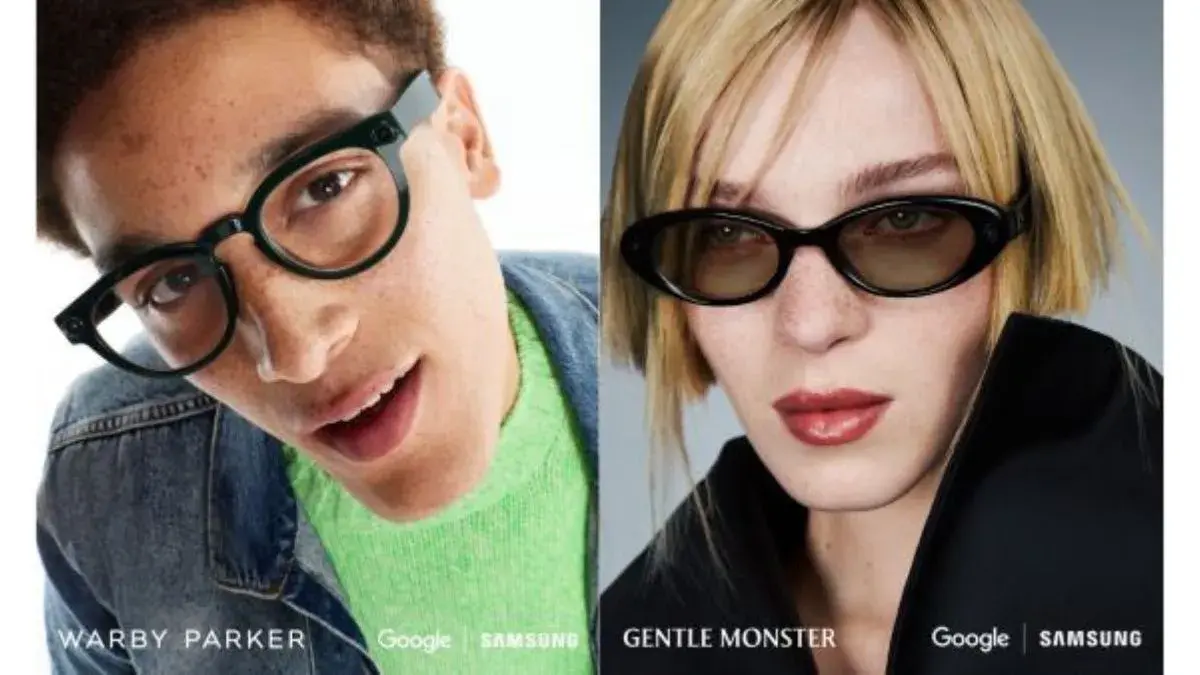
At Google I/O 2026, Samsung and Google jointly announced a new class of intelligent eyewear, integrating Google’s Gemini AI suite directly into the hardware. These smart glasses offer real-time language translation, AI-driven contextual assistance, and seamless hands-free control, all delivered through a lightweight, wearable device. This is a leap beyond previous attempts at smart glasses, which struggled with battery life, limited use cases, and clunky interfaces.
Why does this matter for technologists? The combination of Samsung’s hardware expertise and Google’s advanced AI (notably Gemini, their latest multimodal LLM) means this platform is no longer a tech demo—it’s intended for wide consumer adoption. According to Statista, the global shipment of AR/VR headsets is projected to surpass 40 million units by 2027. With Google’s distribution muscle and Samsung’s manufacturing prowess, these new smart glasses could move AR from niche to mainstream, creating a new frontier for app developers, UX designers, and AI engineers alike.
The Technical Reality: What Engineers Need to Know
Let’s dig into what this means for engineering teams and individual contributors. The Gemini-powered AI smart glasses combine real-time edge inference with cloud-based AI services. Google’s Gemini (currently at version 4.0 in 2026) is a multimodal model supporting voice, vision, and contextual reasoning. The hardware is rumored to use custom Samsung ARM-based chipsets, optimized for on-device AI operations—think of the Tensor G5, but further specialized for low-power, always-on scenarios.
Developers will need to understand Gemini’s SDK, which enables access to real-time translation APIs, image recognition, and context-aware notifications. Unlike early smart glasses (like Google Glass Explorer Edition or Snap Spectacles), these devices support full-fledged containerized apps leveraging Android XR, Google’s extended reality platform. Security and privacy are front-and-center: apps must comply with the new Google Wearable AI Data Guidelines (2026), which mandate on-device processing for sensitive data and user-initiated permissions for camera/mic access.
From an architectural standpoint, expect a hybrid model: intensive tasks (such as language translation or object recognition) are performed locally when possible, using quantized Gemini models running via TensorFlow Lite Micro. For more complex requests, the device securely offloads to the Google Cloud Gemini API, using end-to-end encrypted communication (TLS 1.4+). Developers familiar with Android Jetpack Compose will find new UI paradigms—"glanceable interfaces"—optimized for heads-up display and minimal user distraction.
Comparison to existing solutions: Microsoft’s HoloLens 2 and Apple Vision Pro focus on mixed/augmented reality with high-powered, expensive headsets. Samsung/Google’s approach is lightweight, affordable, and centered on AI utility rather than immersive graphics. That means developers should focus on context-aware micro-interactions, voice-first commands, and privacy-preserving data flows, rather than heavy 3D rendering.
Sample code patterns you’ll see more often:
// Requesting a live translation session via Gemini API
val session = GeminiTranslationManager.startSession(
    sourceLanguage = "ja",
    targetLanguage = "en",
    onResult = { translatedText -> updateGlanceUI(translatedText) }
)
Or for hands-free action triggers:
// Registering an AI-driven gesture
smartGlasses.registerGestureListener(GestureType.NOD) {
    GeminiAssistant.triggerAction("next-step")
}
As for hardware integration, you’ll be working with Samsung’s custom sensor APIs for eye tracking, tap surfaces, and environmental audio cues. Expect close collaboration between mobile, AI, and hardware teams, especially as new APIs and privacy requirements roll out. For best practices, keep an eye on the Android Developers portal and Google’s official Gemini SDK documentation.
Why This Directly Impacts Your Tech Career
As a mentor who has guided hundreds of developers into emerging roles, I can't overstate the impact of a new platform launch like this. First, Software Engineers and Mobile Developers will see a surge in demand for skills related to Android XR, Gemini API integration, and context-aware AI applications. If you have experience with on-device AI, edge computing, or wearable UX, you’re already ahead of the curve.
Second, new job categories are emerging: AI Interaction Designers (who craft natural, glanceable interfaces), Voice UX Specialists, and Privacy Engineers for wearable tech. Companies in consumer electronics, healthtech, fintech, and logistics are actively hiring for these roles. According to Google Careers and LinkedIn’s 2026 Emerging Jobs Report, salaries for AI-powered wearable app developers now start at $140,000 in major US markets, with top roles exceeding $200,000 for cross-functional expertise.
Industries most impacted include healthcare (think real-time translation for clinicians, hands-free data access in surgeries), travel/hospitality (contextual translation and navigation), and logistics (AI-assisted workflow guidance). In the next 12-24 months, we expect a rapid uptick in hackathons, pilot programs, and venture-backed startups centered on smart glasses. If you want to break into these fields, now is the time to build a portfolio of apps or AI services tailored for wearable platforms.
Don’t underestimate the value of cross-discipline skills: those who blend AI/ML, mobile development, and human-computer interaction will be in the highest demand. Companies will be looking for engineers who can build privacy-respecting, performant, and delightful experiences for users who are always-on, but rarely looking at a traditional screen.
Skills You Should Build Right Now
- Gemini AI SDK Proficiency — The Gemini platform is the core of Samsung/Google’s new smart glasses. Learn to build, deploy, and optimize AI-powered features using Gemini’s APIs. Learning path: Start with Google’s official Gemini SDK tutorials and build a sample translation or contextual assistant app.
- Android XR & Wearable Development — Extended reality (XR) and wearable platforms require new UI paradigms and hardware integration. Learning path: Complete the Android XR Developer Nanodegree on Udacity or take Google’s XR Compose course.
- Edge AI & TensorFlow Lite Micro — Many smart glasses features run on-device for privacy and latency. Learning path: Follow TensorFlow Lite Micro’s official docs and build a simple on-device image recognition app.
- Voice & Glanceable UI Design — Designing for minimal, heads-up displays is a unique challenge. Learning path: Read Google’s Material Glanceable UI guidelines, then redesign a mobile app for a wearable context.
- Privacy Engineering for Wearables — With constant sensors and cameras, privacy is paramount. Learning path: Study the Google Wearable AI Data Guidelines and implement user-first permission flows in your side projects.
Interview Preparation: Questions to Expect
- Explain how on-device AI inference differs from cloud-based AI, especially in the context of smart glasses. — Highlight latency, privacy, battery constraints, and when to use which approach. Reference Gemini’s hybrid model as an example.
- Describe a secure architecture for handling real-time voice translation on a wearable device. — Discuss using local processing for sensitive audio, TLS encryption for cloud offloads, and user-initiated permissions.
- Can you walk us through designing a glanceable UI for heads-up displays? — Focus on minimalism, interruption management, and voice/gesture input as primary controls. Mention Google’s glanceable UI guidelines.
- Tell us about a time you had to balance innovation and privacy in an AI-powered app. — Use the STAR method to explain a situation, task, action, and result involving user data, transparency, and compliance.
SupportMeTechs Perspective
From our work preparing learners for the real world, we see the launch of Gemini-powered smart glasses as a watershed moment—much like the original iPhone or the first Android release. Our teaching philosophy centers on hands-on, project-driven learning, because the only way to master wearable AI is to build for it. We’re already updating our curriculum to include Gemini SDK labs, privacy-first wearable app design, and cross-platform XR integration. The students who embrace these new paradigms early are consistently the ones who land the best jobs, because they’re not just learning a framework—they’re building the future of human-computer interaction.
3 Things You Can Do This Week
- Download Google’s Gemini AI SDK and complete the official translation demo app tutorial.
- Redesign a simple Android app (like a to-do list) for a heads-up, glanceable UI and share it on GitHub for portfolio feedback.
- Read the Google Wearable AI Data Guidelines and implement a user-centric permission request in a sample project.
Frequently Asked Questions
How do Gemini-powered smart glasses differ from earlier AR devices?
Gemini-powered smart glasses focus on AI-first, context-aware features (like live translation and voice assistance) rather than immersive 3D graphics. Earlier AR devices, such as Google Glass and HoloLens, struggled with limited battery life, narrow use cases, and lack of powerful on-device AI. The integration of Gemini’s multimodal model allows for real-time, privacy-preserving inference and more natural user interactions. This makes the new generation of smart glasses more useful in everyday scenarios and accessible to mainstream consumers.
What programming languages and tools should I learn to develop apps for these smart glasses?
Most development for Gemini-powered smart glasses will leverage Kotlin or Java for Android XR (extended reality) platforms, combined with the Gemini AI SDK. Familiarity with TensorFlow Lite (particularly the Micro version for on-device inference) is highly recommended. For glanceable UI, experience with Jetpack Compose and Google’s new XR UI toolkits is valuable. Start with Google’s official documentation and sample projects to get hands-on experience with these tools.
What are the main privacy concerns with AI smart glasses, and how do developers address them?
Smart glasses often have always-on microphones, cameras, and sensors, which can raise significant privacy concerns. Developers must follow strict privacy guidelines, including on-device processing for sensitive data, transparent permission requests, and encrypted transmission of any cloud-processed information. Google’s Wearable AI Data Guidelines set clear standards, and engineers should prioritize user control, data minimization, and clear opt-in flows. Building trust is key to user adoption in this space.